Matt vs Satin vs Gloss Wood Floor Finish
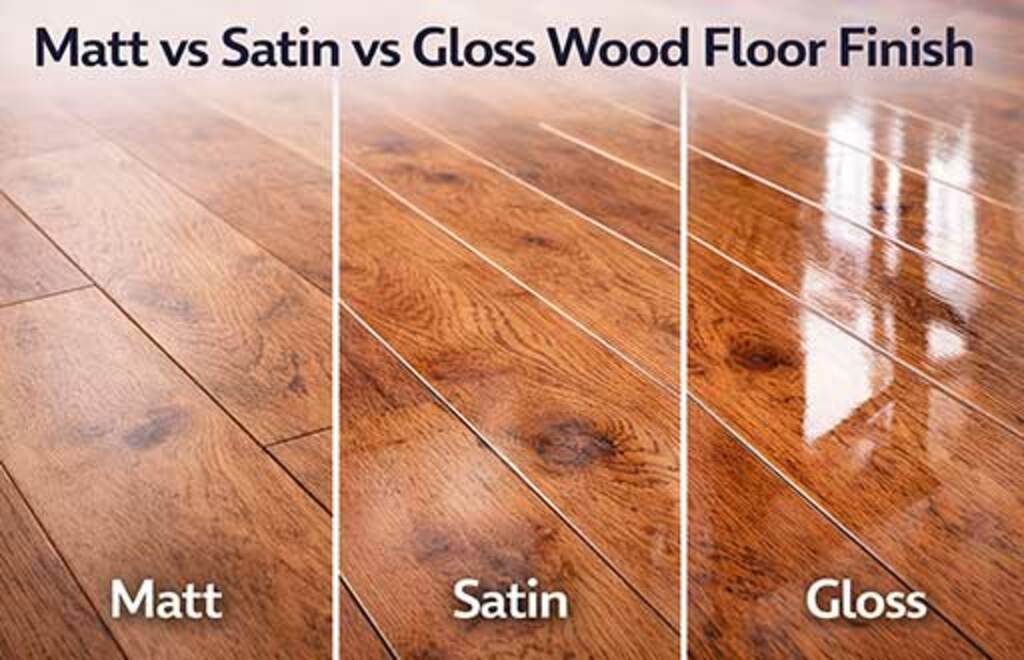 The choice between matt, satin, and gloss wood floor finishes is one of the most personal decisions in any flooring project, but it also has practical implications for maintenance, appearance in different lighting conditions, and how the floor shows wear over time.
Matt Finish
A matt finish reflects very little light and produces a flat, understated appearance that many people find the most natural-looking of the three options. Matt floors look very similar to unfinished or lightly oiled wood, with a soft, almost chalky quality in some products. This makes them particularly popular in contemporary interiors where a clean, minimal aesthetic is the goal.
From a practical perspective, matt finishes are highly forgiving in daily use. Footprints, fine scratches, and surface dust are far less visible on a matt floor than on satin or gloss surfaces. This makes matt an excellent choice for high-traffic areas where marks would otherwise be a constant visual irritation. The diffused surface reflection means the floor looks consistently good between cleans.
The practical downside of matt finishes is that they can be slightly harder to clean than higher-sheen options because the textured surface holds fine particles. However, regular sweeping or dry mopping with a microfibre mop manages this effectively.
Satin Finish
Satin is the most popular sheen level for residential wood floors in the UK and has been for many years. It offers a middle ground between the completely flat appearance of matt and the strong reflectivity of gloss, creating a subtle, warm sheen that enhances the timber without looking over-polished.
- Satin shows the natural grain and colour of the timber without distortion
- More forgiving of marks and footprints than gloss, while still looking polished and well-maintained
- Suits a wide range of interior styles — from traditional farmhouse to contemporary urban
- The most widely available and well-tested finish level across all product ranges
- A good choice when in doubt — it rarely looks wrong in any setting
Satin floors age gracefully. As the surface develops patina over years of use, the slight reflection continues to give the floor life without highlighting every imperfection. For most homes and most timber species, satin is the safe, reliable, and good-looking choice.
Gloss Finish
Gloss produces a high-reflective, mirror-like surface that is visually dramatic and very distinctive. In the right setting, a gloss-finished wood floor looks exceptional. It creates the impression of depth in the timber and reflects light in a way that can brighten a room considerably.
The practical reality of living with a gloss floor is more demanding than the initial impression suggests. Gloss surfaces show every footprint, every finger mark, every piece of dust, and every fine surface scratch. In a home with everyday use, a gloss floor requires frequent cleaning — sometimes daily in visible areas — to maintain its appearance. For this reason, gloss is most appropriate for formal rooms that see limited daily traffic, or for specific design schemes where the high-sheen look is a deliberate and sustained commitment.
Some timber species look particularly effective in gloss — dark woods such as wenge or heavily stained oak develop an impressive jewel-like quality in high gloss. Lighter species in gloss can look slightly clinical or dated if the rest of the interior design does not support the choice.
Making the Decision
If you are uncertain, start with satin — it is difficult to make a wrong choice with a quality satin finish on most timber species. If you specifically want the natural wood look and are comfortable with a low-sheen aesthetic, move to matt. If you want a dramatic, high-impact floor and are committed to the maintenance it requires, gloss can be stunning. Ask your supplier for sample boards finished in each sheen level so you can compare them in your own space before committing.