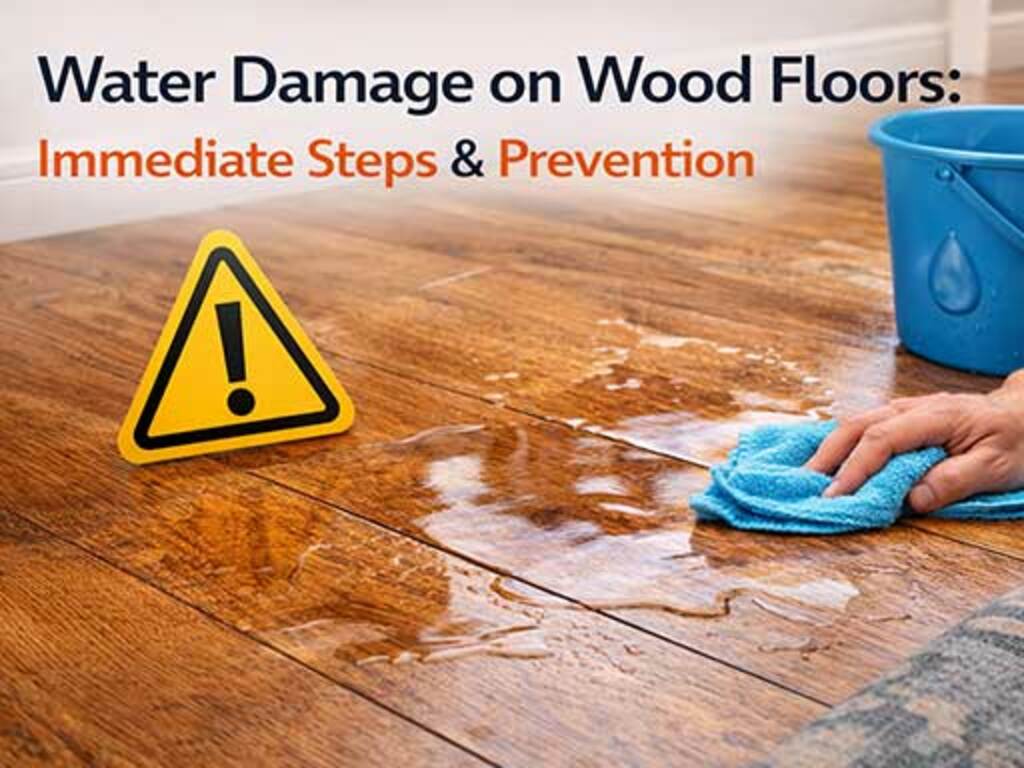
 Water and wood floors are a bad combination — but the outcome depends almost entirely on how quickly you respond. Whether it's a burst pipe, a leaking appliance, or a flood, water damage to wood floors is one of the most common flooring emergencies UK homeowners face. Act within the right window and you may save the floor entirely. Leave it too long and you're looking at full replacement. This guide covers what to do immediately, how to recognise serious damage, what's salvageable, and how to prevent it happening again.
The Critical 24-Hour Window
When water gets into a wood or wood-based floor, the clock starts immediately. Within the first 24 hours, the structure of the board is absorbing moisture but hasn't yet begun to deform significantly. This is your best chance to intervene.
As soon as you discover the water:
- Remove standing water immediately. Use towels, a wet vacuum, or a mop. Get rid of as much surface water as possible before it has more time to penetrate.
- Lift rugs and floor coverings. These trap moisture underneath and accelerate damage to the boards below.
- Move furniture off the affected area. Furniture left standing on wet boards adds weight and seals in moisture.
- Open windows and doors to increase airflow, weather permitting.
- Set up fans and a dehumidifier. Point fans directly across the floor surface. A dehumidifier in the room will pull moisture out of the air and, over time, out of the boards themselves.
- Turn off underfloor heating if fitted. Rapid, uneven drying from below can cause boards to crack or distort.
Do not use high heat — such as a heat gun or positioning a fan heater directly on the boards — in an attempt to speed things up. Aggressive heat causes its own damage and can lead to cracking and warping.
Recognising the Signs of Serious Damage
Even if you've dried the surface, damage may be developing underneath. Knowing what to look for helps you assess whether professional intervention is needed.
There are three main deformation patterns to watch for:
- Cupping — the edges of each board sit higher than the centre, creating a concave profile. This happens when moisture enters from below (subfloor, underlay, or rising damp) while the top surface remains relatively dry. It's the most common sign of prolonged moisture exposure from underneath.
- Crowning — the opposite of cupping. The centre of each board rises higher than the edges, giving a convex, rounded appearance. This typically occurs when moisture has come from above and the surface of the board has swollen more than the underside.
- Buckling — boards physically lift away from the subfloor, sometimes by several centimetres. This is the most severe form of water damage and usually means the boards have absorbed a significant volume of water over a prolonged period.
Discolouration, soft spots, or a musty smell are also indicators of underlying moisture — and potentially mould developing beneath the boards.
What Can Be Saved — by Floor Type
Not all water-damaged wood floors are equal. The type of flooring you have will largely determine whether drying and repair is viable or whether replacement is the only option.
| Floor Type |
Salvageable? |
What's Possible |
| Solid wood |
Often yes, if caught early |
Dry thoroughly, allow to acclimatise, re-sand and refinish. Boards may need to be lifted and re-laid if subfloor is also affected. |
| Engineered wood |
Frequently yes, within 24h |
Dry quickly and the real wood top layer usually survives. Severe or prolonged soaking can delaminate the layers, requiring replacement. |
| Laminate |
Rarely |
The HDF core swells rapidly when wet and does not return to its original dimensions. Affected boards almost always need replacing. |
With solid wood, patience is important. Even after drying, boards that show cupping may flatten out naturally over several weeks as moisture levels equalise. Don't rush to sand or replace boards until the floor has had adequate time to stabilise — typically four to six weeks minimum.
Engineered wood is more dimensionally stable than solid wood by design, but the plywood or HDF base can still delaminate if soaked. If the top veneer remains intact and the layers haven't separated, the board can often be saved.
Laminate is the most vulnerable. Its composite core absorbs water rapidly and swells irreversibly. If laminate boards have been soaked, plan to replace them. The good news is that laminate is generally more affordable to replace than solid or engineered wood, and individual boards in a click-lock system can often be swapped out without lifting the entire floor.
Making an Insurance Claim
If the water damage was caused by a sudden, unexpected event — a burst pipe, appliance failure, or storm flooding — it may well be covered under your home insurance policy. Before you begin extensive drying or repair work, take the following steps:
- Photograph everything before moving furniture or beginning any drying work. Document the extent of the damage clearly.
- Contact your insurer promptly. Most policies require you to report damage as soon as reasonably possible.
- Keep records of any emergency costs — equipment hire, emergency callout fees, temporary accommodation if applicable.
- Don't carry out permanent repairs until the loss adjuster has inspected the damage, unless you need to prevent further deterioration.
Note that insurers will typically not cover damage resulting from gradual leaks that should have been identified and addressed sooner. Maintenance-related failures are usually excluded.
Prevention: Protecting Your Floor Before Problems Start
Preventing water damage on wood floors is far simpler than dealing with the aftermath. Most incidents are avoidable with a few straightforward measures.
Protective finishes
A quality surface finish — whether oil, hardwax oil, or lacquer — provides a barrier that resists water penetration for short-term spills. Ensure your finish is in good condition and re-apply it as recommended. Bare or worn patches are vulnerable entry points for moisture.
Spill response
Wipe up spills immediately. Water left sitting on a wood floor — even a well-finished one — will eventually find its way into the joints between boards. Keep a cloth or paper towel within easy reach in kitchens and bathrooms where spills are most likely.
Appliance maintenance
- Check washing machine hoses and connections every six months. Rubber hoses degrade over time and can fail without warning.
- Inspect dishwasher connections and door seals periodically.
- Check under kitchen and bathroom sinks for slow drips or damp patches — these can go unnoticed for months.
- If you have a wood floor in a kitchen, consider fitting a water leak detector near appliances.
Humidity control
Wood floors are affected by humidity as much as by direct water contact. In the UK, central heating in winter drops indoor humidity significantly, while summer humidity can rise. Keeping indoor relative humidity between 40–60% reduces the natural expansion and contraction of boards and limits their vulnerability to moisture-related damage.
Subfloor and underlay
If you're installing a new floor or re-laying an existing one after water damage, make sure the subfloor is fully dry before laying. Use a moisture meter to confirm readings are within acceptable limits for your chosen floor type. A moisture-resistant underlay can provide additional protection in higher-risk areas.
Key Takeaways
- Act within 24 hours. Remove water, improve airflow, use a dehumidifier, and lift rugs and furniture. This is the window in which most floors can be saved.
- Know your floor type. Solid and engineered wood can often be dried and restored; laminate is usually a write-off once soaked and affected boards will need replacing.
- Document damage before repairs if you intend to make an insurance claim — photographs and prompt notification are essential.
- Prevention is straightforward. Maintain protective finishes, respond to spills immediately, and check appliance connections regularly to avoid water damage becoming a problem in the first place.