How to Choose the Right Flooring Finish: Matt, Satin, Gloss & Beyond
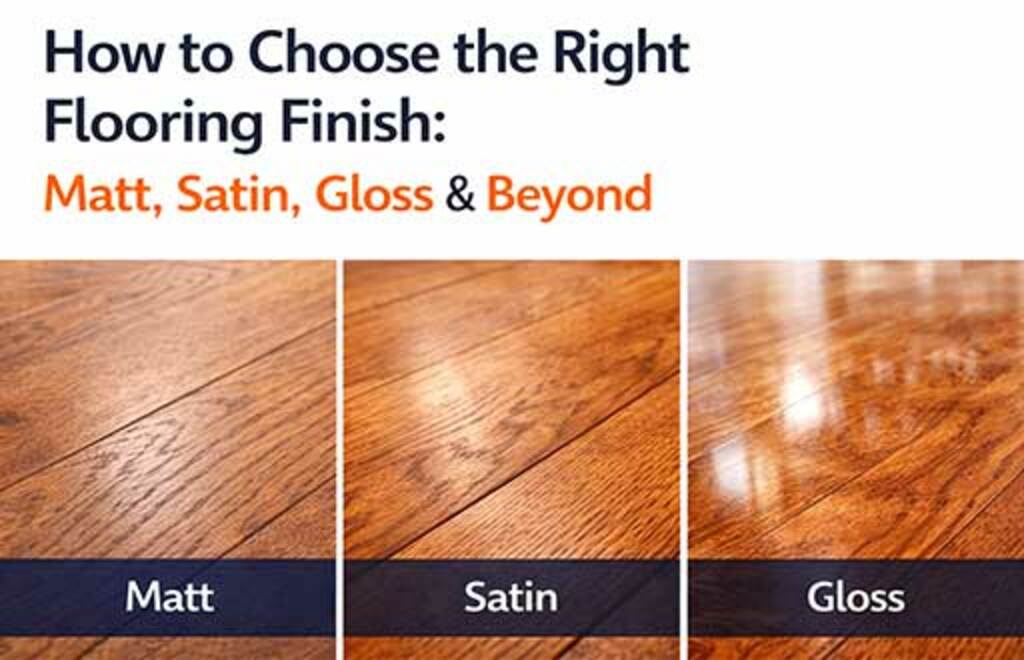 The finish on a wood floor does far more than determine how shiny it looks. It affects how the floor wears, how easy it is to maintain, how forgiving it is of daily life, and ultimately how long it stays looking good. Understanding the main wood flooring finish types available in the UK will help you make a decision you won't regret five years down the line. Whether you're laying engineered oak in a hallway or solid wood in a living room, the finish choice matters just as much as the species or board width.
Sheen Levels Explained: From Matt to High-Gloss
Sheen level is measured on a scale, and each point on that scale comes with genuine practical trade-offs — not just aesthetic ones.
Matt finish has become the most popular choice in the UK heading into 2026, and for good reason. It has little to no sheen, giving the floor a natural, raw appearance that works with both contemporary and rustic interiors. More importantly, it hides surface scratches, fine dust, and footprints far better than any other finish. In a busy household — especially one with children or pets — matt finish will look clean and presentable with far less effort. The lower the sheen, the less light is reflected, and the less every mark is highlighted.
Satin finish sits in the middle ground and remains the most commonly specified finish overall. It has a subtle, soft sheen that gives the floor a polished but not overdone appearance. It suits traditional and period properties well, and strikes a balance between practicality and visual warmth. Satin is a safe, reliable choice for most rooms.
Semi-gloss finish is noticeably reflective and begins to show wear, dust, and scratches more readily. It can look dated in modern interiors, and requires more frequent cleaning to maintain its appearance. It's less commonly specified now than it was a decade ago.
High-gloss finish offers maximum shine and a very formal, lacquered appearance. It shows every footprint, every scratch, and every particle of dust. High-gloss floors can look stunning when first laid, but maintaining that look in any lived-in home is genuinely hard work. This finish is best reserved for very low-traffic areas or commercial showroom settings.
- Matt: No sheen — hides marks, natural look, low maintenance appearance
- Satin: Soft sheen — balanced, traditional, most versatile
- Semi-gloss: Reflective — shows wear more, can look dated
- High-gloss: Maximum shine — hardest to maintain, shows every mark
Brushed and Handscraped Finishes: Texture That Works for You
Beyond sheen level, some floors are given a physical texture treatment before finishing. These aren't just decorative choices — they have a significant effect on how the floor performs in use.
Brushed finish involves passing the board through wire or nylon brushes that remove the soft fibres from the wood grain, leaving the harder grain lines raised and more pronounced. The result is a surface that looks and feels naturally textured. Brushed floors are exceptionally good at concealing everyday wear because small scratches tend to sit within the existing texture rather than standing out against a flat surface. Combined with a matt or oiled finish, a brushed floor can look almost untouched even after years of heavy use.
Handscraped finish replicates the look of floors that have been finished by hand — an artisan technique that creates an irregular, characterful surface with visible tool marks and undulations. Each board looks slightly different, giving the floor a genuine sense of age and craftsmanship. Handscraped floors suit period properties, farmhouse kitchens, and interiors that favour a more traditional or rustic aesthetic. Like brushed finishes, they are very forgiving of wear and tear.
Both brushed and handscraped finishes are typically paired with matt or oiled finishes rather than gloss, as adding sheen to a heavily textured surface defeats the purpose of the texture.
Oiled vs Lacquered: The Most Important Practical Decision
Once you've chosen a sheen level and texture, the most consequential decision is whether your floor is oiled or lacquered. These are fundamentally different approaches to protecting wood, and the difference between them affects long-term maintenance significantly.
| |
Oiled |
Lacquered |
| How it works |
Oil penetrates the wood fibres and protects from within |
Lacquer forms a hard protective layer on top of the wood |
| Appearance |
Very natural, enhances grain, typically matt or low sheen |
Can range from matt to high-gloss |
| Durability |
Softer surface — more susceptible to marks and water |
Harder surface — more resistant to surface damage |
| Repair |
Spot repair is easy — re-oil the affected area |
Difficult to spot repair — full sanding often required |
| Maintenance |
Requires periodic re-oiling (every 1–2 years in high traffic) |
Lower ongoing maintenance — just clean regularly |
| Best suited to |
Households that want a natural look and don't mind occasional maintenance |
Households that want durability with minimal upkeep |
For busy households with children and pets, lacquered floors often make more practical sense day to day — the surface is harder and requires less active maintenance. However, if the floor ever suffers significant damage (deep scratching, water staining), repairing it without a full sand and refinish is difficult.
Oiled floors, by contrast, are easier to live with long-term in one important respect: damage is easy to address. If a section of an oiled floor gets scratched or stained, you can clean it back and re-oil just that area without it being obvious. This makes oiled finishes a sensible choice for anyone who wants the floor to last decades rather than needing full replacement or refinishing.
Practical Advice by Room and Household Type
Choosing a wood flooring finish in the abstract is less useful than matching it to the specific demands of the space it's going into.
- Hallways and kitchens: High footfall, moisture risk. Lacquered or hard-wearing oiled finish. Matt or satin sheen to minimise visible wear.
- Living rooms: Moderate traffic. More flexibility — satin lacquer or oiled both work well. Brushed finish adds longevity.
- Bedrooms: Low traffic. Finish choice is almost entirely aesthetic. Even high-gloss can be practical here.
- Homes with dogs: Claws will mark any floor, but matt and brushed finishes make scratches far less visible. Avoid gloss finishes entirely.
- Period properties: Handscraped or brushed, oiled finish. Will look appropriate and age authentically.
- Modern, minimal interiors: Flat-sawn board, matt lacquer, or hard wax oil. Clean lines, no texture treatment needed.
One often-overlooked consideration is cleaning routine. Oiled floors need specific cleaning products — standard floor cleaners and steam mops can strip the oil and cause damage. Lacquered floors are more forgiving of cleaning product choices, though steam mops should still be avoided on any wood floor.
A Note on Hard Wax Oil
Hard wax oil has grown considerably in popularity as a finish that sits between traditional oil and lacquer. It penetrates the wood like an oil but leaves a thin protective wax layer on the surface. The result is a finish that's more durable than straight oil but retains the natural appearance and spot-repair benefits that make oiled floors attractive. For many homeowners, hard wax oil represents the best practical balance available across all the wood flooring finish types currently on the market.
Key Takeaways
- Matt finish is the most practical choice for most homes — it hides scratches, dust, and footprints far better than satin or gloss, and suits both modern and traditional interiors.
- Oiled floors are easier to repair; lacquered floors are easier to maintain day to day — choose based on whether you'd rather do occasional maintenance or avoid it until a problem becomes serious.
- Brushed and handscraped textures significantly extend the life of a floor's appearance — surface wear is far less visible on a textured board than on a flat-sawn one.