Parquet Block Sizes Explained: How to Choose the Right Proportion
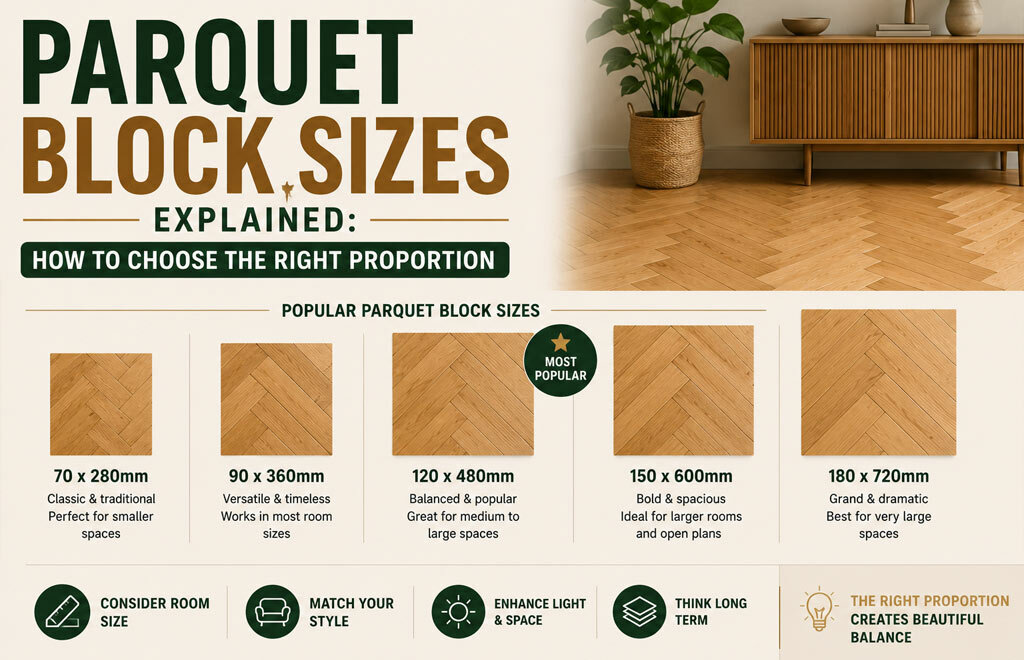 Parquet block size is a decision that most buyers make intuitively but rarely with a full understanding of what the numbers actually mean for the finished floor. Block width, length and thickness all affect the visual character of the pattern, the scale relationship between the floor and the room, and the practical installation and performance characteristics. This guide explains the key dimensions and what they mean in practice.
Block Width
Block width is the most visually influential dimension. Narrow blocks (50mm to 70mm wide) create a tighter, finer pattern with more joints visible per square metre. This suits smaller rooms and period interiors where refinement and detail are characteristic. Wider blocks (90mm to 120mm) produce a bolder, more open pattern with fewer joints, which suits larger rooms and contemporary spaces where a stronger graphic quality is desirable.
The standard UK residential specification for engineered herringbone is 70mm wide. This proportion works in most rooms and is the most widely stocked width at flooring suppliers. 90mm wide is increasingly common in contemporary large-format installations and suits open-plan spaces well.
Block Length
The length of the block relative to its width determines the proportion of the individual blocks and the overall visual rhythm of the pattern. A block that is four times as long as it is wide (e.g., 70mm by 280mm) produces a different pattern to one that is five times as long (70mm by 350mm). The longer the block relative to its width, the more angular and dynamic the herringbone pattern appears; shorter proportions produce a softer, more balanced visual.
Standard proportions for herringbone blocks are typically in the range of 1:4 to 1:5 (width to length). Going to 1:6 or longer produces a pattern that can look too emphatic in smaller rooms. For contemporary spaces and open-plan areas, a slightly longer proportion can look very effective.
Block Thickness
For solid blocks, 20mm to 22mm is the standard thickness. This provides adequate depth for one or two sandings over the floor's lifetime and sufficient strength to resist indentation under normal residential use. Thicker blocks (25mm) are available for commercial and heavy-use applications.
For engineered herringbone blocks, the total thickness is typically 14mm to 18mm with a wear layer of 3mm to 6mm. A 6mm wear layer is the most generous option and allows the floor to be sanded and refinished several times. Thinner wear layers are adequate for most residential applications but provide less long-term flexibility.
Practical Block Size Selection by Room Type
- Bedroom (under 20 square metres): 50mm by 250mm or 70mm by 280mm
- Standard living room: 70mm by 350mm
- Large living room or open plan: 90mm by 450mm
- Grand period reception room: 90mm by 600mm or larger
- Contemporary kitchen or dining: 90mm by 450mm for bold impact
The block size decision is one to make in conjunction with a physical sample if possible. Laying a row of blocks on the floor in the actual room, against the real light and adjacent materials, gives a much better sense of proportion than any specification can. Most flooring suppliers provide sample panels of different block sizes; requesting a couple of sizes for comparison is time well spent before ordering a full floor.